
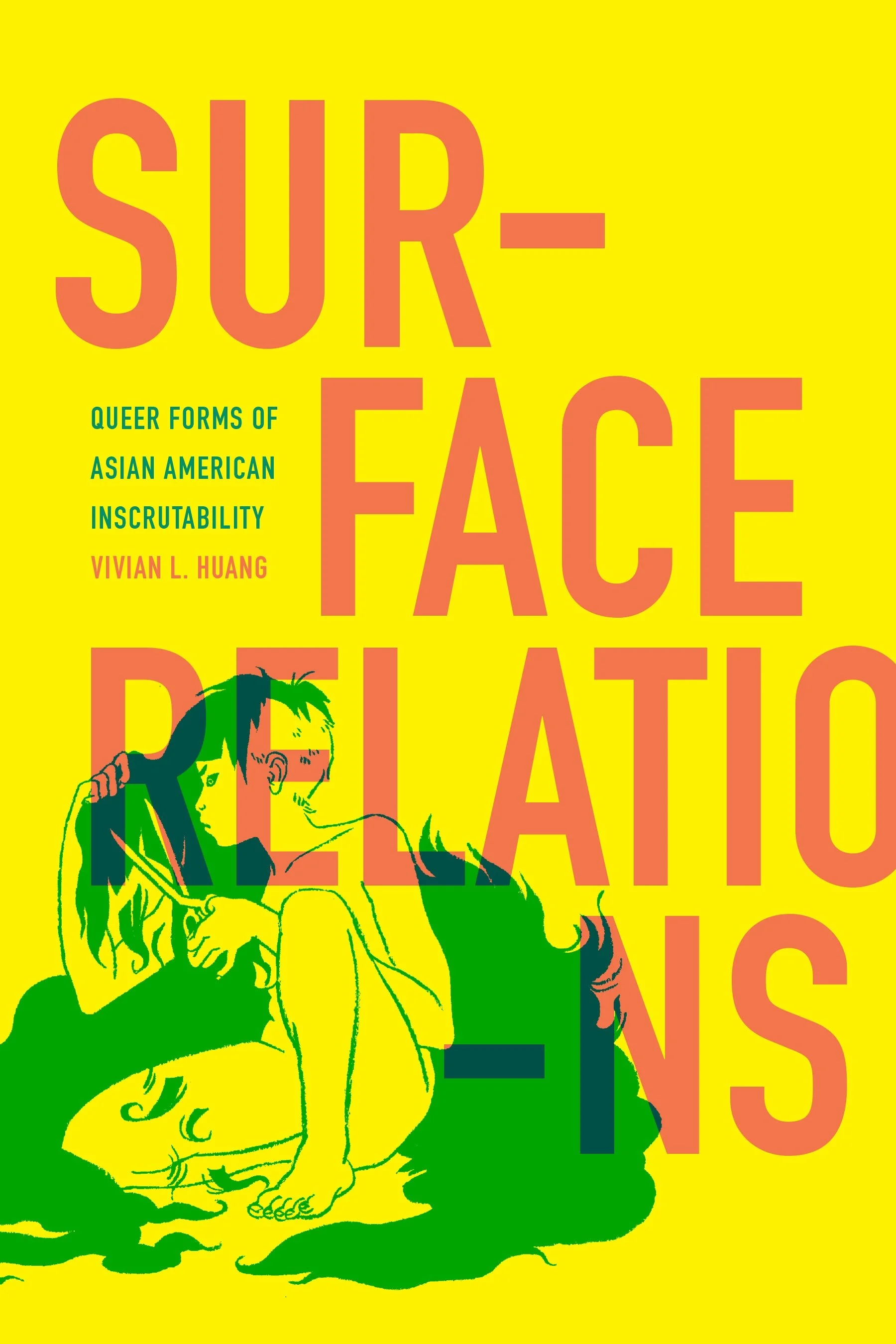
Clinical World Building through Queer forms of Asian American Inscrutability
with Vivian Huang & Mamta Dadlani
This course will take a deep dive into the aesthetic modes of inscrutability described by Vivian Huang in her book Surface Relations: Queer forms of Asian American Inscrutability, with a focus on the interaction between performance studies and 2-person psychoanalytic approaches. We will engage in close reading of theory and make direct links to case formulation and intervention while making use of countertransference and reverie.
The Asian American subject is often cast as “inscrutable” to serve the interests of white supremacy and racial capitalism. Specifically, Asian Americans are characterized as flat, impenetrable, silent, distant, and withholding through the mobilization of racial tropes and persistent biases rooted in colonial occupation and imperial projects.
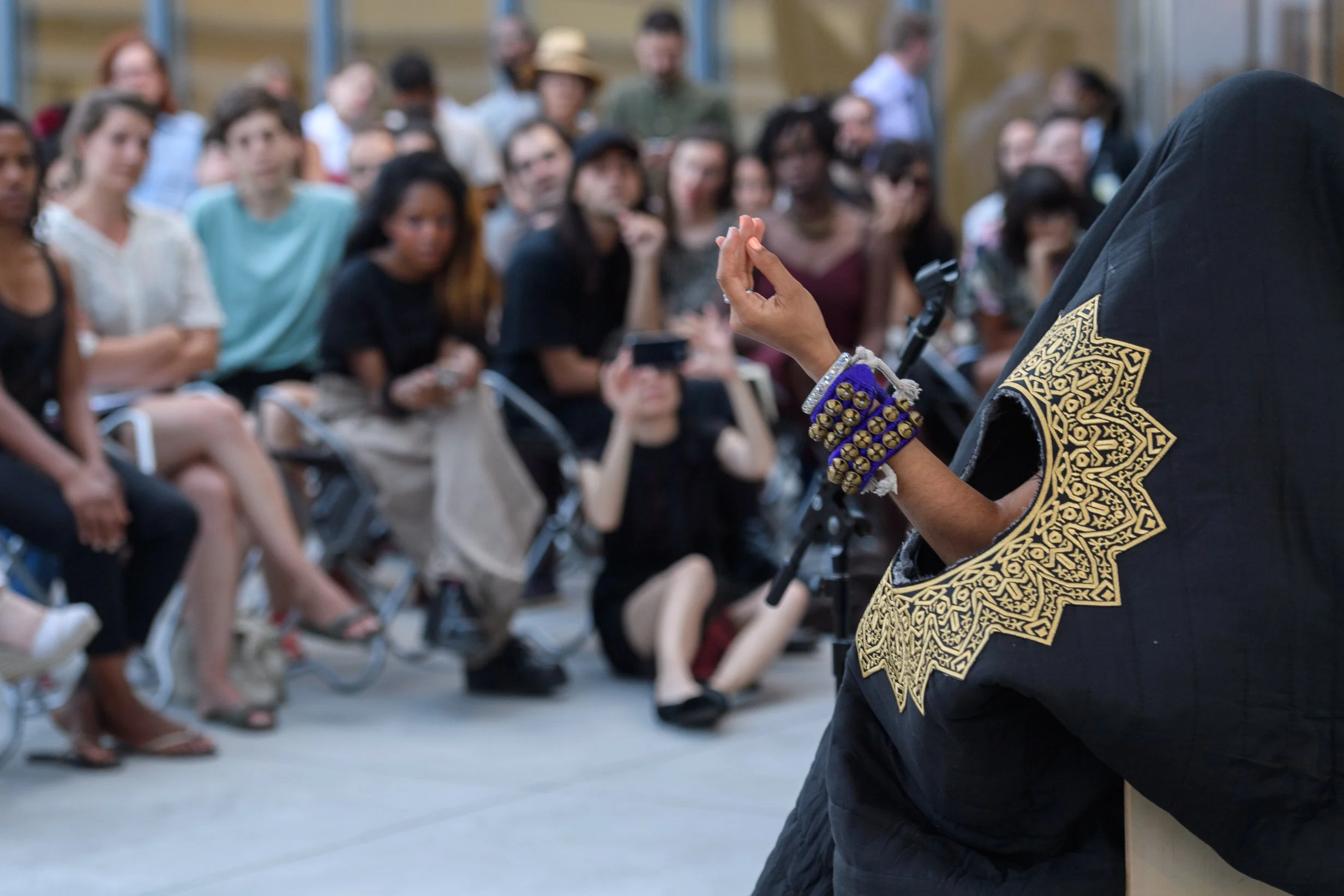
Baseera Khan’s performance Acoustic Sound Blankets
However, Huang argues that “to resign inscrutability only to a position of victimization is to concede too much” and invites us to consider queerly, the structure of a world where Asianness can only appear by disappearing. Together, we will re-consider the spaces that are imperceivable to supremacist processes and will engage in creative world building together and in clinical practice by mobilizing queer racial forms of the noted affective modes of inscrutability.
Furthermore, Huang suggests that “inscrutability can be useful not only for analyzing the performative forms and the force of Asian American racialization but also for interdisciplinary studies of race, gender, sexuality, and minoritarian aesthetics.” We will take this invitation up over this 4 session course as we explore art, psyche, systems of power, and the queer use of our multidimensional selves as a clinical tool.
Enrollment Details
Fridays, November 13, Dec 4, 11, 18 (4 sessions)
10am-12pm Pacific Time over Zoom
$500-700
Minimum of 12 participants, Maximum 18
8 CE credits at the Introductory Level
No partial CE credit is available. You must be present for the duration of the program for credit to be awarded.
CE credits are awarded via APA certification. Please double check to ensure these credits are acceptable to your state’s licensing body.

MEet Vivian
Vivian L. Huang, PhD (she, they) is a writer, teacher, and performer who lives in Oakland with her dog. Vivian’s book, Surface Relations: Queer Forms of Asian American Inscrutability (Duke University Press, 2022), theorizes racial aesthetics and affects of obfuscation in contemporary performance, visual art, and literature. Other writing can be found in Women & Performance, Journal of Asian American Studies, Diacritics, Journal of Popular Culture, GLQ, Signs, Theatre Journal, Frieze Magazine, and Eating More Asian America: A Food Studies Reader. Vivian teaches in race, gender, sexuality, and performance studies in the Department of Communication Studies at San Francisco State University. They are currently an ensemble member in The Fall Show at Shotgun Players and a fellow with Research Justice at the Intersections at The Mills Institute.
Learn More about Vivian here.

Meet Mamta
Mamta Dadlani, PhD (she/her) is a licensed Clinical Psychologist who engages in clinical practice, consultation, training, and scholarship through a lens of critical social inquiry, social justice, and psychoanalytic thinking. As the founder and director of Samavaya Psychology, Mamta supports clients, fellow clinicians, academics, and organizations in addressing issues of justice in liberation in their work.
Mamta’s scholarship is rooted in analyses of power with attention to the impacts of colonization, occupation, and imperialism. Mamta presented on the clinical implications of Vivian’s Huang’s work with Vivian and Yin Jia Li, founder and director of The Asian American Center of Psychoanalysis. This course is an opportunity to take a deep dive into this work.
Samavaya Psychology is approved by the American Psychological Association to sponsor continuing education for psychologists. Samavaya Psychology maintains responsibility for this program and its content. There is no conflict of interest or commercial support for any programs or instructors.Please see this webpage’s FAQ for information about our attendance, refund, and cancellation policies.